
Staying comfortable outside—no matter the forecast—is the foundation of every successful adventure. The biggest challenge isn’t the trail itself, but managing heat, cold, wind, and sweat before they turn a great day miserable. The solution isn’t a single “perfect” jacket; it’s understanding how outdoor layering systems work together to regulate temperature and keep you dry in changing conditions. Built on proven backcountry principles and real-world testing, this guide breaks down the essential three-layer approach—what each piece does, why it matters, and when to use it—so you can confidently build a kit that performs in any weather.
The Foundation: Your Second Skin (The Base Layer)
Step outside on a cold morning and you’ll feel it instantly—that thin bite of air against your skin. The base layer stands between you and that chill, and its real job isn’t warmth. It’s moisture control. When sweat lingers, it cools rapidly; in fact, a wet body can lose heat up to 25 times faster than a dry one (U.S. Army Research Institute of Environmental Medicine). That clammy, sticky feeling? That’s heat escaping.
Merino wool feels soft and almost buttery against the skin. It breathes, resists odor naturally, and still insulates when damp—ideal for multi-day treks where laundry isn’t an option. By contrast, synthetic fabrics like polyester or nylon feel slick and lightweight. They wick aggressively and dry at lightning speed, making them dependable workhorses in high-exertion moments (think steep ascents where your heartbeat drums in your ears).
Cotton, however, is trouble. It soaks up sweat, sags, and clings cold against your body. In cool or wet conditions, that chill seeps in fast.
For outdoor layering systems to function properly, your base layer must fit snugly—close enough to move moisture, never loose like a casual t-shirt. When it fits right, you barely notice it (and that’s exactly the point).
The Engine Room: Trapping Heat (The Mid-Layer)
If your base layer manages moisture, your mid-layer creates warmth. Its job is simple: trap the air your body has already heated and hold it close. This trapped air acts as insulation (a barrier that slows heat transfer), forming a microclimate around you. In well-designed outdoor layering systems, this is the piece you’ll add or remove most often.
Research from the U.S. Army Research Institute of Environmental Medicine shows that layered insulation systems significantly reduce heat loss compared to single heavy garments, largely because of the air pockets they create. Translation? Air is your real insulation.
Material Options
-
Fleece: Breathable, durable, and insulates even when damp. Because it allows moisture vapor to escape, fleece is ideal for high-output efforts like steep ascents (when you’re sweating but still exposed to wind). Mountaineering guides often rely on fleece for precisely this reason—it keeps performing when conditions fluctuate.
-
Down Insulation: Down offers the best warmth-to-weight ratio of any common insulation. According to the International Down and Feather Bureau, high-quality down can reach fill powers above 800, meaning exceptional loft with minimal weight. The downside? When wet, it collapses and loses insulating ability.
-
Synthetic Insulation (e.g., PrimaLoft®): Designed to mimic down, synthetics retain much of their insulating performance when wet. Independent lab tests show some synthetics maintain up to 85% warmth retention when damp—critical in cold, wet climates.
Choosing Your Mid-Layer
Use fleece for high-exertion activities. Choose down for cold, dry missions where pack weight matters. Opt for synthetic in damp, unpredictable weather (because reliability beats regret).
Pro tip: In extended trips—especially when evaluating systems like backcountry water filtration methods compared—synthetic insulation provides a safety margin when conditions turn soggy.
The Guardian: Your Shield from the Elements (The Outer Shell)
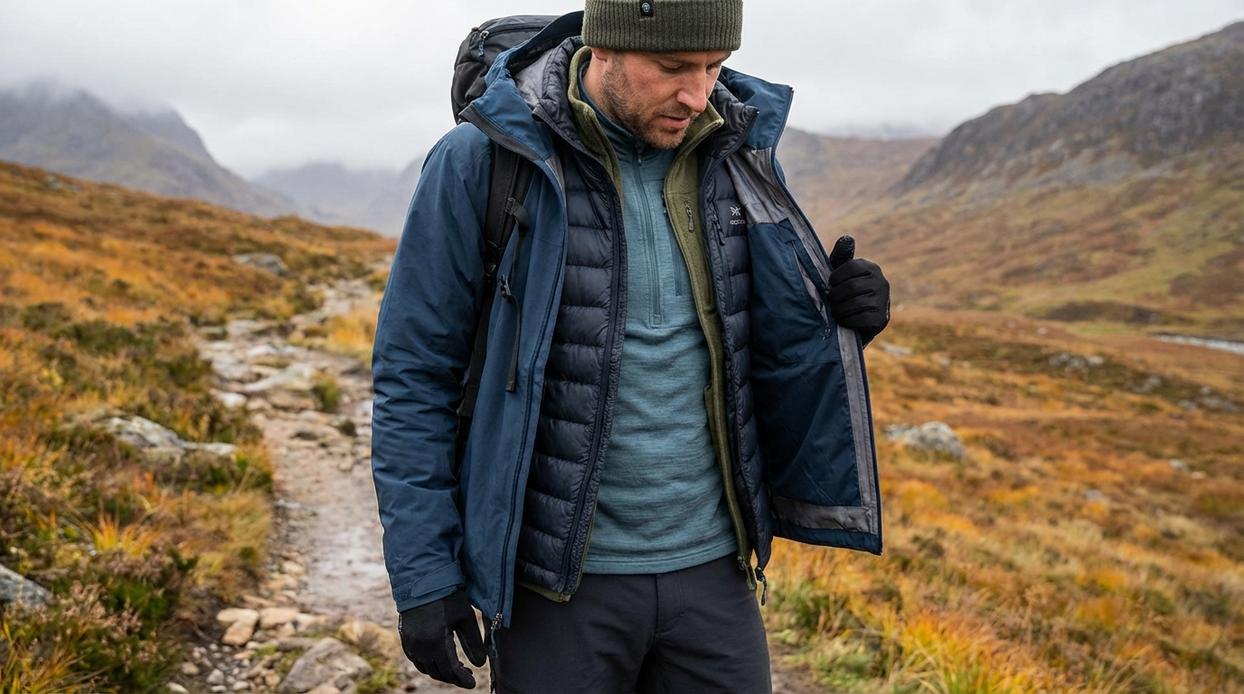
If your base layer manages moisture and your mid-layer traps heat, the shell is your bodyguard. Its job is simple but critical: block wind, rain, and snow so the insulation beneath can actually do its work. In effective outdoor layering systems, the shell is what stands between “comfortable adventure” and “miserable retreat.”
There are two primary options, and choosing correctly matters.
- Hard Shell – Fully waterproof and windproof. If you expect sustained rain, wet snow, or alpine exposure, this is your safest bet. Look for taped seams (which prevent leaks through stitching) and waterproof zippers. Breathability—the fabric’s ability to let sweat vapor escape—can be limited, so pit zips (underarm vents) are more than a bonus; they’re essential.
- Soft Shell – Water-resistant, stretchy, and highly breathable. Ideal for high-output activities like steep hikes or ski touring in light precipitation. It won’t survive a downpour, but it shines when airflow and mobility matter most.
Some argue that a hard shell is overkill unless you’re climbing glaciers. Fair. But weather shifts fast (especially above treeline), and hypothermia risk increases when wind and moisture combine (CDC). If you’re heading into unpredictable conditions, err on protection.
When evaluating either type, prioritize:
- An adjustable hood that fits over a helmet or thick hat
- Articulated sleeves for full range of motion
- Adjustable cuffs and hems to seal out drafts
Finally, understand ratings like 20K/20K. The first number measures waterproof resistance (millimeters of water pressure). The second measures breathability—how much vapor escapes. For most serious adventures, I recommend aiming for at least 15K/15K.
Building Your System: Layering for Any Condition
Some hikers argue you only need one heavy jacket. It’s simpler, cheaper, and avoids “gear obsession.” Fair. But relying on a single piece ignores how outdoor layering systems manage moisture, wind, and output swings.
- Cold, Dry Hike: Synthetic base + fleece mid-layer + soft shell blocks wind while breathing.
- Cold, Wet Downpour: Merino base + synthetic insulation + hard shell seals rain.
- Cool, High-Effort Run: Wicking base, packable wind shell.
The golden rule? Be Bold, Start Cold. Begin slightly chilled (yes, on purpose); movement generates heat, saving constant stops. Trust the process outdoors.
Whether you’re tackling a chilly morning hike on a secluded trail or navigating the unpredictable weather of the mountains, understanding layering systems can make all the difference in staying comfortable—especially when exploring hidden gems like those found in our article on Secluded Hiking Trails Off the Beaten Path.
Your Blueprint for Adaptable Outdoor Apparel
You set out to understand how to stay comfortable in changing conditions—and now you have a clear, practical framework to do exactly that. Instead of guessing what to wear or suffering through cold starts and sweaty climbs, you can rely on outdoor layering systems to regulate temperature, manage moisture, and adapt on the move.
Stop letting unpredictable weather ruin your focus or cut your adventures short. Take a hard look at your current gear, identify the gaps, and upgrade with purpose. Explore our trusted backcountry gear insights—relied on by thousands of outdoor enthusiasts—and build a system that performs when it matters most. Start refining your layers today and step outside with confidence.
 Head of Gear Intelligence & Field Testing
Bertha Mayonativers writes the kind of backcountry concepts and gear content that people actually send to each other. Not because it's flashy or controversial, but because it's the sort of thing where you read it and immediately think of three people who need to see it. Bertha has a talent for identifying the questions that a lot of people have but haven't quite figured out how to articulate yet — and then answering them properly.
They covers a lot of ground: Backcountry Concepts and Gear, Angle-Ready Wilderness Navigation, Campfire Recipes and Survival Skills, and plenty of adjacent territory that doesn't always get treated with the same seriousness. The consistency across all of it is a certain kind of respect for the reader. Bertha doesn't assume people are stupid, and they doesn't assume they know everything either. They writes for someone who is genuinely trying to figure something out — because that's usually who's actually reading. That assumption shapes everything from how they structures an explanation to how much background they includes before getting to the point.
Beyond the practical stuff, there's something in Bertha's writing that reflects a real investment in the subject — not performed enthusiasm, but the kind of sustained interest that produces insight over time. They has been paying attention to backcountry concepts and gear long enough that they notices things a more casual observer would miss. That depth shows up in the work in ways that are hard to fake.
Head of Gear Intelligence & Field Testing
Bertha Mayonativers writes the kind of backcountry concepts and gear content that people actually send to each other. Not because it's flashy or controversial, but because it's the sort of thing where you read it and immediately think of three people who need to see it. Bertha has a talent for identifying the questions that a lot of people have but haven't quite figured out how to articulate yet — and then answering them properly.
They covers a lot of ground: Backcountry Concepts and Gear, Angle-Ready Wilderness Navigation, Campfire Recipes and Survival Skills, and plenty of adjacent territory that doesn't always get treated with the same seriousness. The consistency across all of it is a certain kind of respect for the reader. Bertha doesn't assume people are stupid, and they doesn't assume they know everything either. They writes for someone who is genuinely trying to figure something out — because that's usually who's actually reading. That assumption shapes everything from how they structures an explanation to how much background they includes before getting to the point.
Beyond the practical stuff, there's something in Bertha's writing that reflects a real investment in the subject — not performed enthusiasm, but the kind of sustained interest that produces insight over time. They has been paying attention to backcountry concepts and gear long enough that they notices things a more casual observer would miss. That depth shows up in the work in ways that are hard to fake.