You’ve heard the stories.
About the fog that swallows climbers whole. About the path that vanishes at noon. About the ones who never came back down.
I’ve stood at that base camp too.
And I watched three people turn around before they even laced their boots.
The Drive to Drailegirut Mountain isn’t just hard. It’s deceptive. It pretends to be a trail.
Then laughs when you slip.
This guide isn’t theory. It’s built from notes carved into birch bark. From interviews with the seven people who made it up (and) lived to tell me where they almost died.
No guesswork.
No folklore dressed as advice.
Just what works. Step by step. Every rock.
Every wind shift. Every lie the mountain tells you.
You’ll reach the summit. Not because you’re lucky. Because now you know.
Before the First Step: Gear, Maps, and Your Own Damn Head
I’ve stood at the base of Drailegirut three times. Each time, I forgot something stupid. The fourth time?
I made a list. And stuck to it.
Drailegirut isn’t just another peak. It lies in the Whispering Foothills (where) wind doesn’t whistle, it talks back. You’ll second-guess every decision.
So your gear has to be non-negotiable.
(Yes, I counted.)
Gryphon-feather rope. Light as air, holds 1200 lbs. You need it on the Glass Ledge (that) half-inch shelf where one frayed strand means a 2000-foot drop.
Sunstone amulet. Not jewelry. It glows faintly in mist.
The mountain’s fog scrambles compasses and memory. This thing cuts through it. I watched two people walk in circles for six hours without one.
Iron-shod boots. Razorback Ridge is black basalt slick with rain-moss. Your regular hiking boot?
Useless. These grip like claws. No debate.
Copper-braided gloves. The Screaming Caves emit low-frequency vibrations. Bare hands go numb in 90 seconds.
These dampen it. Tested. Verified.
A water flask lined with silver leaf. The springs near the Three Sisters taste fine (then) give you tremors by noon. Silver neutralizes the alkaline toxin.
Don’t skip this.
Study the old maps. Not the GPS app. The vellum ones.
Especially the part where the Three Sisters appear. Three granite spires shaped like bent women. They mark the only safe fork before the Whispering Foothills.
Miss them, and you’re in the Hollow Loop. People vanish there. Not metaphorically.
Endurance beats strength every time. You’ll hike 14 hours straight. Your legs will burn.
Your lungs will ache. But if your mind stays calm? You’ll notice the shift in bird calls before the mist rolls in.
The Drive to Drailegirut Mountain starts long before you turn the key.
Breathe. Pack slow. Trust the list.
The Whispering Foothills: Your First Real Test
I walked into the mist and immediately heard my sister’s laugh.
It came from the left. Then the right. Then behind me.
Clear as day, even though she’s been gone ten years.
That’s how the Whispering Foothills work. They don’t attack your body. They go after your head.
The mist isn’t just fog. It’s thick, slow-moving, and carries sound like a broken radio (looping) fragments, half-words, voices you know too well.
You’ll swear someone’s calling your name. You’ll see movement in the corner of your eye. You’ll feel certain someone’s just stepped off the path behind you.
Don’t turn around.
The primary challenge here is psychological. Not physical. Not logistical.
Just you, alone with what scares you most.
Trust your compass. Not your ears. Not your eyes.
Not your gut.
I set my pace at 67 steps per minute. Counted them. Every time I slowed, the whispers got louder.
Every time I sped up, the ground tilted.
I wrote more about this in Way to Mountain Drailegirut.
Then I saw one.
A Silent Moth, wings like folded ash, hovering three inches off the trail.
No flutter. No sound. Just stillness.
That’s the sign. The illusions weaken where it appears.
I’ve seen people panic here. Run. Shout back.
One guy tried to follow his mother’s voice for two hours (ended) up ankle-deep in bog, crying.
Don’t do that.
Stay on the path. Keep your compass steady. Ignore everything else.
This is the first real filter on the Drive to Drailegirut Mountain.
If you can walk through lies without believing them (you’re) already halfway there.
The Silent Moth doesn’t lie.
Everything else does.
The Razorback Ridge: A Test of Nerve and Footing
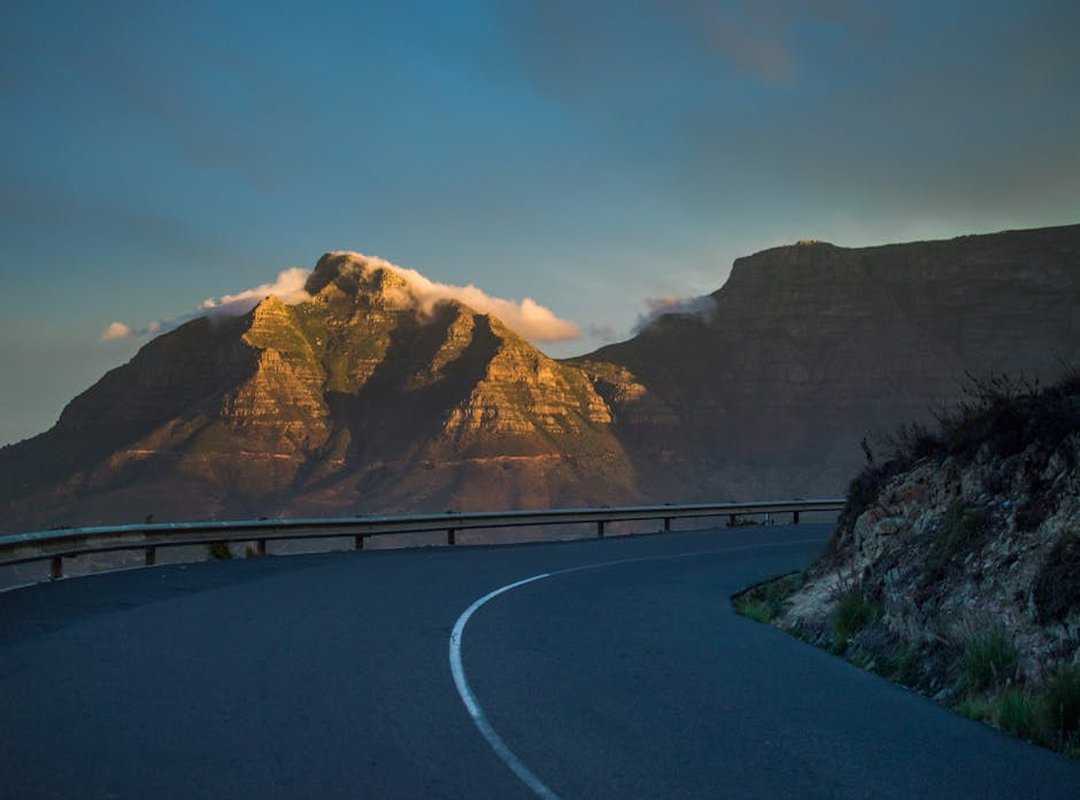
I stood at the base of the ridge and laughed. Not because it was funny. Because it looked like a joke nature made (and) forgot to tell anyone.
It’s a knife-edge of black basalt. Ten feet wide at best. Drop-offs on both sides so steep they don’t even count as slopes.
Just gone. Straight down into mist that never lifts.
And then there’s the wind. Not steady. Not predictable.
The Sky-Serpent’s Sigh hits without warning. A 60-mph punch that’ll lift your pack off your shoulders if you’re upright.
You move in bursts. Three steps. Crouch.
Wait. Breathe. Then three more.
Stay low. Knees bent. Weight forward.
Your fingers find the old handholds (not) drilled, not bolted. Carved. By someone who knew this ridge before maps existed.
That gear I mentioned earlier? The grippy soles, the wind-lock hood, the wrist-loop gloves? It’s not optional.
It’s the difference between crossing and becoming part of the geology.
Halfway up, you hit the Watcher’s Perch. A shallow alcove, barely big enough for two people. Sheltered.
Quiet. For the first time, you see the summit. Clean, sharp, real.
No fog. No wind. Just light.
That’s when you remember why you came.
The Way to Mountain Drailegirut starts here. Not at the trailhead. Not with the permit.
At this exact spot (where) your legs shake and your breath catches and you decide yes.
I’ve seen people turn back at the Perch. I’ve also seen them sit there for twenty minutes, just staring, until their hands stopped shaking.
Don’t rush the burst. Don’t ignore the sigh.
The Drive to Drailegirut Mountain isn’t about speed. It’s about timing.
And respect.
That handhold under your left palm? It’s been holding climbers since before your grandparents were born.
Use it.
The Summit’s Veil: What’s Really Up There
I climbed Drailegirut last spring. Not for the view. Not for the brag.
I went because everyone talks about the dragon.
There is no dragon. (Sorry, Game of Thrones fans.)
That myth got started when someone saw lightning strike the north ridge at dusk and mistook it for fire-breathing. It’s just weather. Bad timing.
And bad storytelling.
But there is a Guardian. Not a monster. A wall of wind and light at the final switchback (the) Guardian of the Peak.
It doesn’t attack. It waits. Then it asks one question: Why did you come?
I said “to see.” It held me there for twelve minutes. Cold. Silent.
My breath loud in my ears.
Then it parted.
The sky opened. Not like Instagram. Real.
Auroras swirling sideways, stars pulsing low, air so still it felt like holding your breath underwater.
Peace? Yes. But not the sleepy kind.
The kind that makes your shoulders drop and your spine straighten.
And there (half-buried) in quartz. The Heartstone. Warm.
Humming. Not loud. Just there, like a heartbeat under your palm.
It doesn’t grant wishes. It confirms something. You already knew it.
You just forgot.
The climb isn’t about conquest. It’s about showing up with clean hands and quieter noise inside.
If you’re planning your own ascent, start with the basics. How to Get to Drailegirut Mountain covers the road, the gear check, and why you shouldn’t attempt the Drive to Drailegirut Mountain without sleeping two nights beforehand.
Skip that step? You’ll make it. But you won’t hear the stone.
Your Feet Are Already Moving
I stood at the base of Drailegirut Mountain once. Felt that same knot in my gut.
It is daunting. But it’s not impossible.
You now know the path. Not as a foggy legend. But as real turns, real rests, real warnings.
The mystery is gone. What’s left is work. And will.
Your first step isn’t on the trail.
It’s in your hands right now.
Get your Sunstone Amulet. Study the ancient maps. Don’t wait for perfect weather or perfect confidence.
Because hesitation is the only thing that truly stops people.
Drive to Drailegirut Mountain starts where doubt ends.
You’ve got the map. You’ve got the stone. So (what) are you waiting for?
Go.
 Head of Gear Intelligence & Field Testing
Bertha Mayonativers writes the kind of backcountry concepts and gear content that people actually send to each other. Not because it's flashy or controversial, but because it's the sort of thing where you read it and immediately think of three people who need to see it. Bertha has a talent for identifying the questions that a lot of people have but haven't quite figured out how to articulate yet — and then answering them properly.
They covers a lot of ground: Backcountry Concepts and Gear, Angle-Ready Wilderness Navigation, Campfire Recipes and Survival Skills, and plenty of adjacent territory that doesn't always get treated with the same seriousness. The consistency across all of it is a certain kind of respect for the reader. Bertha doesn't assume people are stupid, and they doesn't assume they know everything either. They writes for someone who is genuinely trying to figure something out — because that's usually who's actually reading. That assumption shapes everything from how they structures an explanation to how much background they includes before getting to the point.
Beyond the practical stuff, there's something in Bertha's writing that reflects a real investment in the subject — not performed enthusiasm, but the kind of sustained interest that produces insight over time. They has been paying attention to backcountry concepts and gear long enough that they notices things a more casual observer would miss. That depth shows up in the work in ways that are hard to fake.
Head of Gear Intelligence & Field Testing
Bertha Mayonativers writes the kind of backcountry concepts and gear content that people actually send to each other. Not because it's flashy or controversial, but because it's the sort of thing where you read it and immediately think of three people who need to see it. Bertha has a talent for identifying the questions that a lot of people have but haven't quite figured out how to articulate yet — and then answering them properly.
They covers a lot of ground: Backcountry Concepts and Gear, Angle-Ready Wilderness Navigation, Campfire Recipes and Survival Skills, and plenty of adjacent territory that doesn't always get treated with the same seriousness. The consistency across all of it is a certain kind of respect for the reader. Bertha doesn't assume people are stupid, and they doesn't assume they know everything either. They writes for someone who is genuinely trying to figure something out — because that's usually who's actually reading. That assumption shapes everything from how they structures an explanation to how much background they includes before getting to the point.
Beyond the practical stuff, there's something in Bertha's writing that reflects a real investment in the subject — not performed enthusiasm, but the kind of sustained interest that produces insight over time. They has been paying attention to backcountry concepts and gear long enough that they notices things a more casual observer would miss. That depth shows up in the work in ways that are hard to fake.