
If you’re planning a short adventure into the wilderness, having the right gear can mean the difference between a smooth outing and a stressful one. This day hike packing guide is designed to help you confidently prepare for a safe, comfortable, and rewarding experience on the trail. Whether you’re heading into local backcountry routes or exploring unfamiliar terrain, knowing exactly what to bring—and what to leave behind—matters.
Many hikers either overpack and weigh themselves down or underpack and face avoidable risks. This guide cuts through the guesswork with practical, field-tested recommendations built around real-world outdoor conditions. We’ve drawn on extensive backcountry experience, wilderness safety principles, and proven navigation practices to ensure every item listed serves a clear purpose.
By the end, you’ll know how to pack efficiently, stay prepared for changing conditions, and step onto the trail with confidence—without carrying unnecessary weight.
Your Blueprint for the Perfect Day Hike
Picture this: sweeping views, steady footing, and that quiet pride when you return safely to the trailhead. A perfect hike isn’t luck—it’s preparation. Without it, a sunny morning can spiral into dehydration, wrong turns, or worse (nature doesn’t grade on effort).
This isn’t another generic checklist. It’s a field-informed, gap-filling confidence framework competitors overlook—covering terrain research, microclimate shifts, and turnaround times most guides ignore.
- Route intel and bailout points
- Layering strategy for temperature swings
- Water calculation by mileage and elevation
- Navigation backups beyond your phone
Use this day hike packing guide to ensure safety and enjoyment.
The Ten Essentials: Your Non-Negotiable Safety Net
The Ten Essentials aren’t about expecting disaster. They’re about controlling the outcome when plans change. Even on a short, familiar trail, small problems compound quickly (a twisted ankle doesn’t care how close the parking lot is).
Navigation. Getting lost is still the top backcountry issue, according to the National Park Service. Modern navigation means a fully charged phone with a downloaded map, backed by a power bank and a physical map and compass. Technology fails; redundancy saves time and stress.
Headlamp. Darkness falls faster than expected—especially under tree cover. A lightweight LED headlamp with fresh batteries keeps you moving safely if a two-hour hike stretches longer.
Sun Protection. UV exposure increases with elevation (CDC). Sunglasses, SPF 30+ sunscreen, and a brimmed hat prevent burns, dehydration, and fatigue.
First Aid. Blisters become infections; sprains become immobilizing. A compact kit with bandages, blister care, compression wrap, and pain relief turns setbacks into manageable delays.
Knife. A small folding knife handles gear repairs, food prep, and emergency improvisation. Simple tool, outsized utility.
Fire Starter. Waterproof matches or a butane lighter plus tinder provide warmth and signaling ability if temperatures drop unexpectedly.
Emergency Shelter. A lightweight bivy or space blanket blocks wind and retains body heat—critical in sudden weather shifts.
Extra Food. High-calorie snacks stabilize energy when timelines slip.
Extra Water. Dehydration clouds judgment. Carry more than you think, plus a small filter.
Extra Clothes. A dry insulating layer prevents hypothermia, even in mild seasons.
Think of this as your day hike packing guide: not fear-based packing, but practical insurance—Batman’s utility belt, minus the theatrics.
Dressing for Success: Layering and Footwear Fundamentals
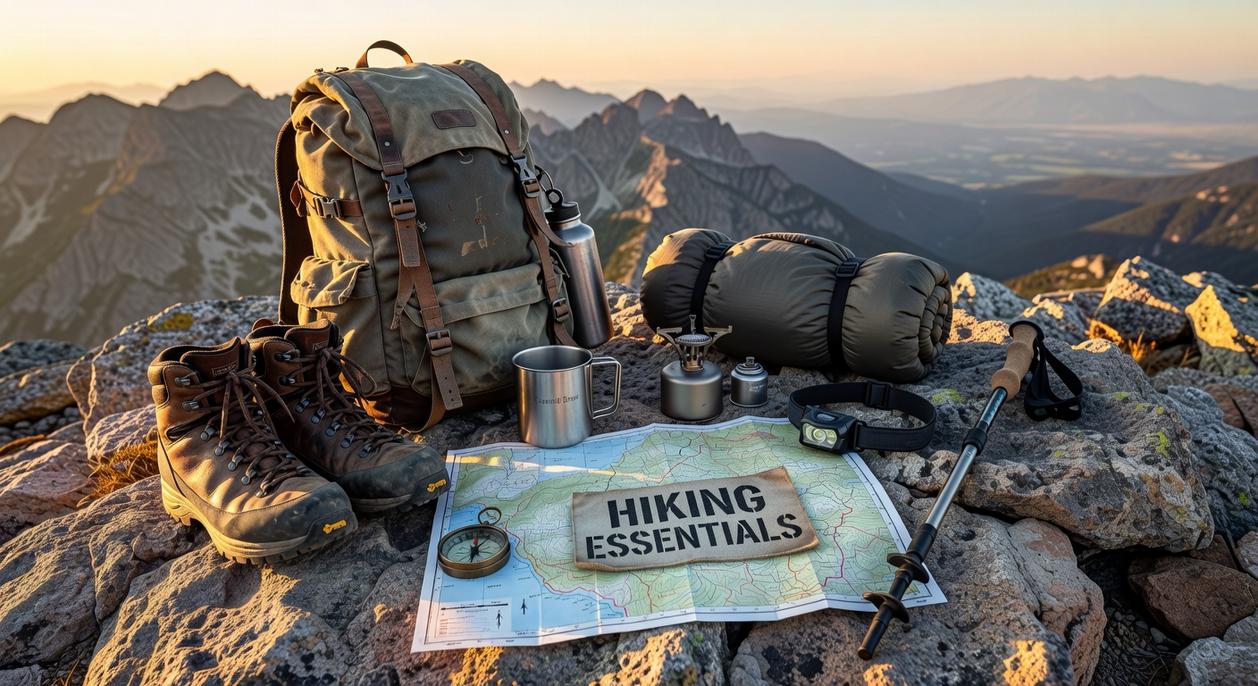
I learned the hard way that sneakers have no place on rocky trails. On a steep five-mile loop, my running shoes slipped on gravel, and I felt every root through the soles (my feet were furious by mile three). Hiking boots or trail runners, especially broken-in ones, provide ankle support and lugged outsoles—deep tread patterns designed for traction. According to the American Hiking Society, proper footwear significantly reduces common trail injuries. Pair them with non-cotton socks—merino wool or synthetic blends wick moisture (pull sweat away from skin) and prevent blisters.
The Layering System Explained
Think of clothing as a thermostat you control:
- Base layer – Moisture-wicking fabric that keeps sweat off your skin.
- Mid-layer – Insulation like fleece that traps body heat.
- Outer shell – Waterproof and windproof protection against the elements.
This system works because trapped moisture cools the body up to 25 times faster than dry air (National Weather Service). Which brings us to the golden rule: cotton kills. Cotton absorbs water and loses insulation, increasing hypothermia risk—even in mild weather.
For carrying gear, choose a 15–30 liter daypack. Heavier items sit close to your spine for balance; snacks and maps go up top. I always cross-check my day hike packing guide and review the emergency items you should always carry outdoors before heading out.
Fueling your hike starts with a simple hydration rule: drink about half a liter of water per hour of moderate hiking. In hotter weather or on steep climbs, increase that amount. In other words, don’t wait until you feel parched. “Drinking before you’re thirsty” means sipping consistently so your body stays ahead of dehydration (which is simply a deficit of fluids that affects performance and thinking).
As for carrying water, bladders let you sip hands-free, while bottles are easier to refill and track intake. Some hikers debate this endlessly; however, the best choice is the one you’ll actually use consistently.
Beyond the bottle, always pack a lightweight filter or purification tablets. Even on a short trek, plans change. A backup water treatment method can turn a risky stream into a safe refill.
When it comes to food, think calorie-dense and non-perishable: nuts, dried fruit, energy bars. Eat before you’re hungry to maintain steady energy. Pro tip: pack more than you think—your future self will thank you (see any reliable day hike packing guide).
Before You Step on the Trail: The Pre-Hike Checklist
Before lacing up your boots, start with research. First, know your route. Check the trail’s distance, elevation gain (the total vertical climb), difficulty rating, and recent conditions on park websites and trail apps. A five-mile hike with 2,000 feet of gain feels very different than a flat five (think treadmill versus Stairmaster). Some argue that planning kills spontaneity. Fair—but search and rescue reports consistently cite poor planning as a leading factor in backcountry incidents (National Park Service).
Next, become a weather watcher. Mountain forecasts vary dramatically by elevation. Don’t rely on the sunny prediction for the nearby town; check the summit forecast. As anyone who’s seen a sudden storm roll in—very “Into the Wild”—knows, conditions can shift fast.
Then, conduct an honest self-assessment. Choose the hike that matches your current fitness and experience, not your Instagram ambitions. Pro tip: if you can’t comfortably carry what’s in your day hike packing guide, scale back.
Finally, leave a detailed plan with a reliable person. Include:
| Detail | Why It Matters |
|—|—|
| Exact trail and route | Narrows search area |
| Group members | Headcount accuracy |
| Start and return time | Triggers action window |
It’s not dramatic—it’s smart.
Every great outdoor adventure rests on meticulous preparation. The difference between a memorable story and a rescue story is often a few key items left behind. That headlamp with fresh batteries, a weatherproof shell rated to 10,000mm, and a map plus compass are features that translate directly into safety and confidence. Follow a systematic checklist for gear, clothing, and planning; it removes guesswork and sharpens judgment. Use this day hike packing guide once more, lay everything out, and confirm fit, function, and fuel. Preparation is protection. Step onto the trail ready for whatever comes your way. Four simple final checks.
Ready to Pack Smarter and Hike Stronger
You set out looking for clarity on what to bring, what to leave behind, and how to avoid the frustration of being underprepared on the trail. Now you have a clear, practical roadmap to follow. With the right layers, safety essentials, navigation tools, and nutrition strategy, you’re no longer guessing—you’re hiking with purpose.
Forgetting critical gear, overpacking unnecessary weight, or realizing too late that you missed a key safety item can turn an incredible day outdoors into a stressful experience. That pain point is real—and completely avoidable when you follow a proven day hike packing guide built around real-world trail demands.
Now it’s time to take action. Review your gear, build your personalized checklist, and pack intentionally before your next outing. If you want trusted, trail-tested advice that thousands of outdoor enthusiasts rely on, explore more of our expert gear breakdowns and backcountry insights. Get prepared today—so your next hike is defined by adventure, not avoidable mistakes.