Ever tried lighting a fire with frozen hands and a soggy map? I have. It’s miserable.
But when you’re out there, survival gear innovations can be the difference between shivering through the night and enjoying a roaring campfire. This article dives into these game-changing advancements. Not just to list them, but to explain why they’re a must-have in your kit.
I’ve spent countless hours in the wild, testing everything from vintage tools to the latest tech. You don’t need all the shiny new toys, but knowing what works is key. Trust me, I’ve learned the hard way.
So, what’s in it for you? A no-nonsense guide to the best survival gear. Understand what to upgrade and why it matters.
Ready to transform your backcountry experience? Let’s get into it.
The Primal Elements, Reimagined: Modern Fire and Water
We all know fire and water are the basics. If you’re stuck out there in the wild, these two elements can make or break you. But their roles have evolved in survival gear innovations.
Remember when fire was just flint and steel? Now, it’s all about high-tech gadgets.
Let’s talk about fire first. The old ferro rods have their place, but have you tried those high-temperature plasma lighters? They’re windproof, rechargeable, and honestly, a game-changer.
They even work in a storm (seriously). And those wax-infused ropes for tinder? So much better than the soggy mess you deal with when using leaves.
There’s even stormproof matches that burn when wet. These advances don’t just make things easier. They redefine what it means to be prepared.
Now, water filtration used to be a slow process. Anyone remember iodine tablets? They worked but were tedious and left water tasting like a swimming pool.
Now, we’ve got high-flow hollow-fiber filters, like the Sawyer Squeeze. Super easy. Filters out the bad stuff, keeps the good.
Simple science: tiny fibers capture bacteria and protozoa, leaving you with pure water faster than you can say “thirsty.”
And if you think that’s high-tech, check out UV-C light purifiers. They zap viruses with light. It’s quick and effective.
No more waiting hours for water to be safe. These advancements cut down the time and risk, making outdoor adventures way more feasible.
Curious about more important backcountry navigation tools for beginners? Check out the guide that dives deeper into this area. Because while fire and water are key, knowing your way can save your life.
The future of survival gear isn’t just about staying alive. It’s about thriving, with a touch of modernity that keeps you ahead of the game.
The Unbreakable Cocoon: Revolution in Shelter Materials
to the age-old dilemma. Weight vs. durability. It’s like being asked to choose which arm you want to lose.
But honestly, we don’t have to pick anymore. Why? Enter space-age materials like Dyneema Composite Fabric and advanced silpoly or silnylon coatings.
These innovations are flipping the script on survival gear.
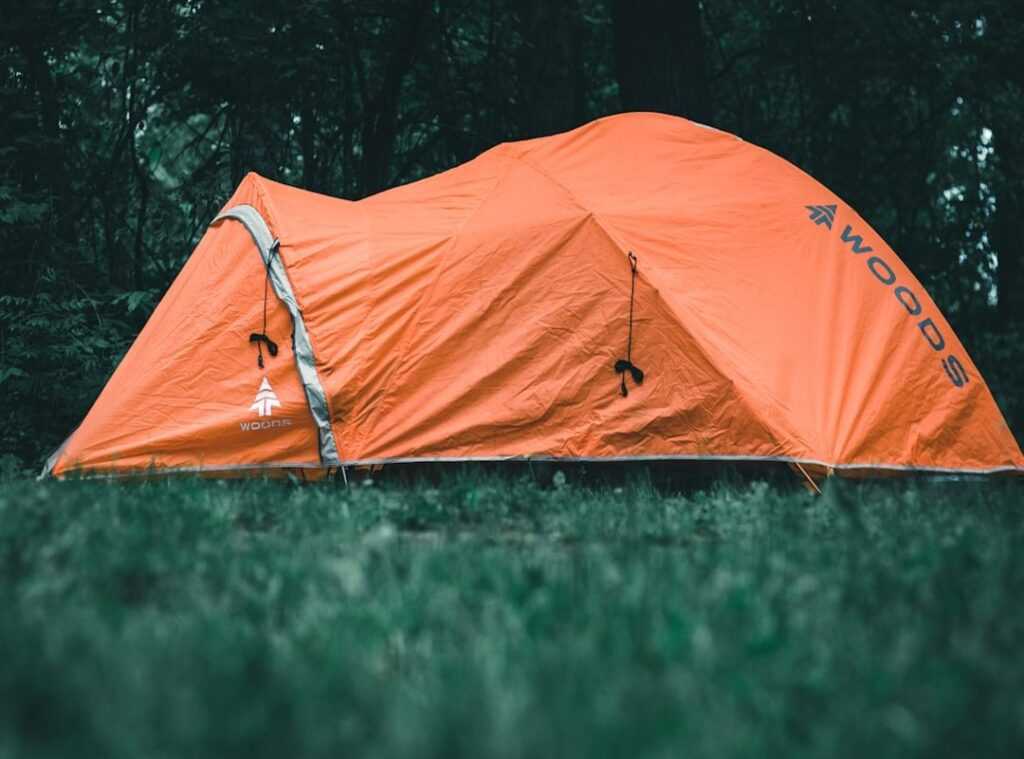
These fabrics offer incredible tear strength, are waterproof, and, surprisingly, weigh less than a full water bottle. Imagine that. A traditional heavy canvas tarp feels like you’re carrying a sack of bricks.
Compared to a modern Dyneema tarp, which can cover more area and still be light. What’s this mean for survival plan?
Picture moving through rugged terrain without your back screaming in agony. You can carry ultralight bivvies and tarps without worrying about being weighed down. Just grab your gear, and go.
Faster movement means better chances of survival. And let’s face it, when you’re in survival mode, speed can be the difference between life and a very unpleasant situation.
Survival gear innovations are changing how we think about shelter. The revolution in materials is setting us free to roam further, stay longer, endure more. And isn’t that the dream of every wanderer or adventurer?
As these materials become more accessible, expect a radical shift in survival gear design and technique. The old ways are fading, and a new era is upon us.
It’s an exciting time to be alive. What will they think of next? My bet is even lighter, even stronger.
It’s a wild ride, and I, for one, am ready to see where it takes us.
Never Truly Lost: Your Lifeline to the World
Let’s talk about getting lost. It’s terrifying, right? But with survival gear innovations, you don’t have to fear the wilderness.

These days, technology has your back, and it’s a game-changer for anyone who loves to wander off the beaten path.
First up, GPS units. Once clunky and unreliable, now they’re precision tools. They’ve got longer battery life, better mapping, and pinpoint accuracy.
Gone are the days of blotchy maps and dead batteries when you need them most. Imagine standing on a mountain, surrounded by nothing but nature (and maybe a questionable-looking cloud), and your GPS just works. It’s your best friend out there.
Then there’s the Personal Locator Beacon (PLB). Think of it as your personal red panic button. This little device sends a one-way SOS signal directly to search and rescue teams.
It’s registered to you and only you. When the chips are down, you hit that button and the cavalry comes running. It’s simple, reliable, and doesn’t rely on cell towers or satellites for communication.
You trust it with your life.
Now, the real star of the show: Satellite Messengers. Brands like Garmin inReach and ZOLEO have revolutionized how we communicate in emergencies. Unlike PLBs, these devices offer two-way communication.
It’s not just a lifeline; it’s a conversation.
Picture this: you’ve sprained your ankle deep in the Rockies. Instead of just sending out a distress call, you can text rescuers directly. You share your exact location, the nature of your injury, and even coordinate your rescue.
Each of these technologies has its place in your backpack. GPS for navigation, PLBs for dire emergencies, and Satellite Messengers for subtle communication. Which one suits your adventure style?
Maybe a combo of all three. When venturing into the wild, gear up smartly. Speaking of smart choices, check out the top lightweight tents for wilderness adventures.
They’re as important as your navigation tools.
So, are you ready to embrace the freedom of exploration without the fear of being lost? With these tools, the world is your playground. Now get out there and explore.
Harnessing the Sun and Stars: Portable Power and Illumination
All this new tech needs power, right? Well, portable solar panels have come a long way. They’re not just for sunny days anymore.
Even in overcast conditions, modern panels can charge a power bank. That’s a game changer. Think about it: your survival gear innovations need juice.
LEDs have also evolved from those dim bulbs to hyper-fast beacons. Headlamps today? They offer incredible lumen output, long battery life, and USB-C recharging.
And don’t forget the red light modes (night vision saviors). This isn’t just luxury; it’s important. Keeping your communication and navigation gear operational is what could save your life.
Does it all sound like sci-fi? Maybe. But it’s real, and it’s here.
Gear Up or Get Left Behind
You get it now, right? Survival gear innovations have turned survival from a gamble into a calculated effort. The fear of a tent ripping or a flashlight failing can haunt you. But modern gear?
It’s lighter and more reliable. It enhances your skills, not hinders them. So, what’s next?
Audit your survival kit. Identify one piece that’s lacking. Upgrade it.
This guide is your blueprint for safer adventures. Don’t leave your next trip to chance. Feel confident.
Feel prepared. If you’re still relying on outdated gear, it’s time to make a change before it’s too late. Act now.
 Founder & Chief Exploration Officer
There is a specific skill involved in explaining something clearly — one that is completely separate from actually knowing the subject. Valdran Vornhaven has both. They has spent years working with outdoor packing essentials in a hands-on capacity, and an equal amount of time figuring out how to translate that experience into writing that people with different backgrounds can actually absorb and use.
Valdran tends to approach complex subjects — Outdoor Packing Essentials, Backcountry Concepts and Gear, Angle-Ready Wilderness Navigation being good examples — by starting with what the reader already knows, then building outward from there rather than dropping them in the deep end. It sounds like a small thing. In practice it makes a significant difference in whether someone finishes the article or abandons it halfway through. They is also good at knowing when to stop — a surprisingly underrated skill. Some writers bury useful information under so many caveats and qualifications that the point disappears. Valdran knows where the point is and gets there without too many detours.
The practical effect of all this is that people who read Valdran's work tend to come away actually capable of doing something with it. Not just vaguely informed — actually capable. For a writer working in outdoor packing essentials, that is probably the best possible outcome, and it's the standard Valdran holds they's own work to.
Founder & Chief Exploration Officer
There is a specific skill involved in explaining something clearly — one that is completely separate from actually knowing the subject. Valdran Vornhaven has both. They has spent years working with outdoor packing essentials in a hands-on capacity, and an equal amount of time figuring out how to translate that experience into writing that people with different backgrounds can actually absorb and use.
Valdran tends to approach complex subjects — Outdoor Packing Essentials, Backcountry Concepts and Gear, Angle-Ready Wilderness Navigation being good examples — by starting with what the reader already knows, then building outward from there rather than dropping them in the deep end. It sounds like a small thing. In practice it makes a significant difference in whether someone finishes the article or abandons it halfway through. They is also good at knowing when to stop — a surprisingly underrated skill. Some writers bury useful information under so many caveats and qualifications that the point disappears. Valdran knows where the point is and gets there without too many detours.
The practical effect of all this is that people who read Valdran's work tend to come away actually capable of doing something with it. Not just vaguely informed — actually capable. For a writer working in outdoor packing essentials, that is probably the best possible outcome, and it's the standard Valdran holds they's own work to.