Choosing the right trekking poles can make or break your time on the trail. Whether you’re planning a multi-day backcountry trek, a steep alpine ascent, or a long-distance thru-hike, the right support improves balance, reduces joint strain, and boosts endurance. If you’re here, you’re likely looking for clear, practical guidance on trekking pole selection—not marketing fluff or vague recommendations.
This article is built to help you confidently compare materials, locking mechanisms, grip types, and sizing so you can match your poles to your terrain and trekking style. We break down what actually matters in real-world conditions, from rugged mountain routes to uneven forest trails.
Our insights are grounded in hands-on wilderness experience, field testing across varied environments, and deep familiarity with backcountry gear performance. By the end, you’ll understand exactly what to look for—and what to avoid—so you can invest in trekking poles that truly support your next adventure.
After a long descent, you feel it: tired knees, aching joints, that dull throb that follows you to the trailhead. However, most hikers blame their boots, not their lack of support. Meanwhile, the market is flooded with carbon shafts, twist locks, cork grips, and bold claims. So where do you start?
After years testing gear on rugged backcountry trails, from dense forests to alpine ridges, I’ve learned this: focus on fit, weight, and lock reliability first. In trekking pole selection, choose adjustable aluminum for durability, cork handles for comfort, and secure lever locks. Ultimately, buy for your terrain, not trends.
Beyond Just a Stick: The Real-World Benefits of Trekking Poles
1. Joint Preservation
First and foremost, trekking poles significantly reduce impact on your joints. Research published in the Journal of Sports Sciences found that using poles can reduce compressive force on the knees by up to 25%, especially during descents. That’s not trivial when you’re logging thousands of steps downhill. By absorbing shock and redistributing load through the arms and shoulders, poles act like built-in suspension (your knees will thank you tomorrow). Over time, this can mean fewer overuse injuries and longer hiking longevity.
2. Enhanced Stability and Balance
Moreover, poles create two additional points of contact with the ground. This improves balance on loose scree, muddy trails, or sketchy river crossings. According to biomechanical studies, increasing ground contact points measurably improves stability on uneven terrain.
3. Increased Power and Endurance
Finally, poles engage your upper body, activating muscles in the arms, shoulders, and core. This shared workload reduces leg fatigue and boosts uphill efficiency. Smart trekking pole selection ensures proper fit, maximizing propulsion and endurance over long distances.
The Core Anatomy of a Trekking Pole
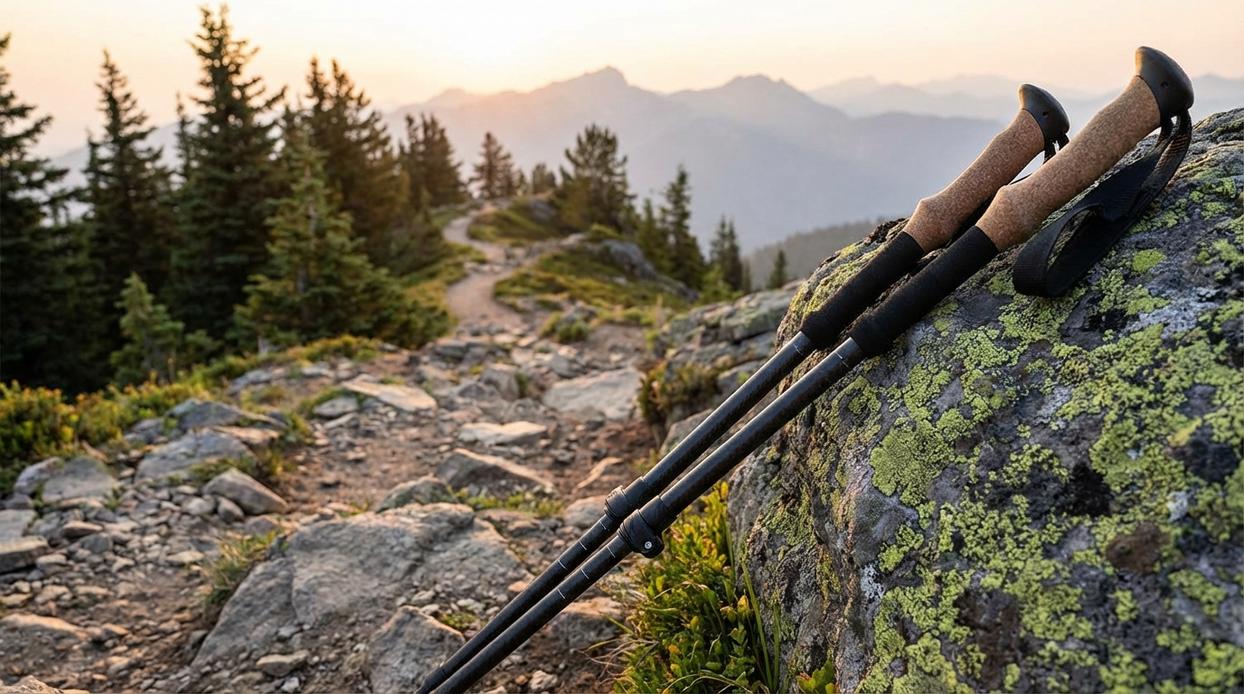
I learned the hard way that not all trekking poles are built the same. On a windy ridgeline in the Rockies, one of my poles snapped mid-descent (nothing wakes you up faster than that sound). That moment sent me deep into the mechanics of trekking pole selection—and why the details matter.
Shaft Material: Carbon Fiber vs. Aluminum
The shaft—the main body of the pole—determines weight, durability, and trail feel.
Carbon Fiber is prized for being ultralight and excellent at vibration dampening (meaning it absorbs trail shock before it reaches your wrists). On long thru-hikes, especially when applying ultralight backpacking principles for long distance treks, every ounce counts. Studies show reducing pack weight lowers fatigue and joint strain over time (Journal of Sports Sciences, 2018). Carbon helps with that. The downside? It’s more expensive and can snap under extreme lateral stress. When mine broke, it failed cleanly—no warning bend.
Aluminum, on the other hand, is the reliable workhorse. It’s more affordable, highly durable, and tends to bend rather than break. That bend can actually save a trip (you can sometimes bend it back). The tradeoff is weight. It’s heavier than carbon, which you’ll notice after 15 miles. Some hikers argue aluminum is outdated because of the weight penalty. I disagree. In rugged, unpredictable terrain, that durability is comforting—like choosing a sturdy pickup over a sports car.
Pro tip: If you’re heading somewhere remote, durability often beats minimal weight.
Locking Mechanisms: Flick-Lock vs. Twist-Lock
The locking mechanism controls pole length adjustability.
Flick-Lock (External Lever) systems use a small clamp on the outside of the shaft. They’re reliable, easy to adjust (even with gloves), and simple to maintain. Most high-quality poles now use this design. In freezing rain, I’ve adjusted flick-locks in seconds while my friend wrestled with his twist-locks.
Twist-Lock (Internal Expander) systems tighten by twisting sections until an internal mechanism expands and grips. They offer a sleeker profile, but can be harder to tighten or loosen. Dirt, moisture, or cold can reduce performance. Critics say they’re lighter and cleaner-looking—and that’s true—but field reliability often wins.
Grip Material: Cork, Foam, and Rubber
The grip affects comfort more than most hikers expect.
Cork conforms to your hand over time, wicks sweat, and dampens vibration. It’s ideal in hot weather.
Foam (EVA) feels the softest and absorbs moisture well. It’s a versatile, all-around choice.
Rubber insulates in cold weather and excels in mountaineering. However, in warm conditions it can cause sweaty hands or chafing (ask me how I know).
The right combination turns poles from accessories into trail partners.
Pole Design: Telescoping vs. Folding
The first time I brought folding poles on a windy ridgeline hike, I felt like I’d upgraded from a flip phone to a smartphone. They snapped into place in seconds. But later, hauling a heavier pack through rocky switchbacks, I missed the sturdiness of my old telescoping pair. That experience changed how I think about trekking pole selection.
Telescoping poles have two or three sections that slide into each other and lock. Because they’re highly adjustable, they’re ideal for long descents, uneven terrain, and backpacking with weight. Their thicker shafts are generally more durable (which matters when you trip and put your full weight on them).
Folding (“Z-style”) poles use an internal cord, much like a tent pole, so they collapse into a compact bundle. They’re lightweight and easy to stash in a daypack—perfect for trail runners, climbers, and travelers counting every ounce.
Some hikers argue folding poles are less durable. That can be true under heavy loads, but for fast-and-light missions, the weight savings often outweigh the tradeoff.
Essential Accessories: Baskets and Tips
I once slipped on wet granite because I forgot to swap my rubber tips for carbide. Lesson learned.
Pole tips:
- Carbide tips are hard metal points designed for traction on rock and ice (they bite into slick surfaces).
- Rubber tip protectors reduce noise on pavement and protect fragile terrain.
Baskets:
- Small trekking baskets prevent poles from sinking into mud or wedging between rocks.
- Large snow baskets provide flotation, stopping poles from plunging deep into powder.
Some hikers skip baskets altogether. In dry summer conditions, that’s fine. But in mud or snow, they’re the difference between smooth strides and constant frustration.
Making Your Final Choice: A Trail-Ready Checklist
Choosing a trekking pole doesn’t have to feel like decoding survival gear specs. It’s really about clarifying your priorities. Think of this as trekking pole selection made simple.
-
My Primary Terrain Is: Rocky / Forested / Mixed
Terrain means the type of ground you hike on. Rocky trails favor aluminum (more durable), while mixed terrain works well with carbon fiber (lighter, but less impact-resistant). -
My Top Priority Is: Weight / Durability / Cost
Weight reduces fatigue; durability resists bending; cost keeps things practical. -
I Hike Mostly In: Hot / Cold / Varied Weather
Grip material matters—cork wicks sweat, foam insulates in cold. -
I Need to Pack Them Small: Yes / No
Folding poles collapse compactly; telescoping poles adjust length easily (handy on steep climbs).
Answer these clearly, and you’re trail-ready for years ahead.
As you explore the benefits and types of trekking poles for your next hike, consider how these essential tools can enhance your experience in light of the exciting outdoor adventure trends shaping 2026 – for more details, check out our Top Outdoor Adventure Trends Shaping 2026.
Step Forward With Confidence on Every Trail
You set out looking for clarity on choosing the right gear, sharpening your skills, and making smarter decisions in the wild. Now you have a clearer understanding of what works, what lasts, and what truly supports you when conditions get unpredictable.
The biggest frustration for most hikers and backcountry explorers isn’t the miles — it’s uncertainty. Gear that fails. Routes that confuse. Small mistakes that turn into big problems. Dialing in essentials like trekking pole selection and reliable navigation techniques removes doubt and replaces it with control.
The next move is simple: apply what you’ve learned. Audit your current setup. Upgrade what’s holding you back. Practice the skills before you need them. Preparation is what separates stressful trips from unforgettable ones.
If you’re serious about safer, smarter adventures, explore our in-depth gear breakdowns and field-tested survival guides today. Thousands of outdoor enthusiasts rely on our trusted insights to make confident backcountry decisions. Get equipped, get prepared, and make your next trek your strongest yet.
 Wilderness Navigation & Survival Content Strategist
Diane Khanatibo writes the kind of backcountry concepts and gear content that people actually send to each other. Not because it's flashy or controversial, but because it's the sort of thing where you read it and immediately think of three people who need to see it. Diane has a talent for identifying the questions that a lot of people have but haven't quite figured out how to articulate yet — and then answering them properly.
They covers a lot of ground: Backcountry Concepts and Gear, Angle-Ready Wilderness Navigation, and plenty of adjacent territory that doesn't always get treated with the same seriousness. The consistency across all of it is a certain kind of respect for the reader. Diane doesn't assume people are stupid, and they doesn't assume they know everything either. They writes for someone who is genuinely trying to figure something out — because that's usually who's actually reading. That assumption shapes everything from how they structures an explanation to how much background they includes before getting to the point.
Beyond the practical stuff, there's something in Diane's writing that reflects a real investment in the subject — not performed enthusiasm, but the kind of sustained interest that produces insight over time. They has been paying attention to backcountry concepts and gear long enough that they notices things a more casual observer would miss. That depth shows up in the work in ways that are hard to fake.
Wilderness Navigation & Survival Content Strategist
Diane Khanatibo writes the kind of backcountry concepts and gear content that people actually send to each other. Not because it's flashy or controversial, but because it's the sort of thing where you read it and immediately think of three people who need to see it. Diane has a talent for identifying the questions that a lot of people have but haven't quite figured out how to articulate yet — and then answering them properly.
They covers a lot of ground: Backcountry Concepts and Gear, Angle-Ready Wilderness Navigation, and plenty of adjacent territory that doesn't always get treated with the same seriousness. The consistency across all of it is a certain kind of respect for the reader. Diane doesn't assume people are stupid, and they doesn't assume they know everything either. They writes for someone who is genuinely trying to figure something out — because that's usually who's actually reading. That assumption shapes everything from how they structures an explanation to how much background they includes before getting to the point.
Beyond the practical stuff, there's something in Diane's writing that reflects a real investment in the subject — not performed enthusiasm, but the kind of sustained interest that produces insight over time. They has been paying attention to backcountry concepts and gear long enough that they notices things a more casual observer would miss. That depth shows up in the work in ways that are hard to fake.