Ever tried to start fire wet conditions? You know the feeling. You’re cold, damp, and surrounded by misty woods.
The rain won’t quit. Fire seems impossible. this guide comes in. After years in the backcountry, I’ve learned fire-starting the hard way.
Trial and error taught me what works (especially) when nature isn’t on your side. Why trust this? Because I’ve been there.
I know the struggle. This isn’t just survival. It’s about comfort, warmth, and thriving outdoors.
What you’ll find here isn’t basic advice. It’s a step-by-step guide that digs into the science and technique of wet-weather fire craft. You won’t just light a fire.
You’ll gain confidence to face any weather. Ready to master this skill? Let’s get started.
Why Wet Wood Won’t Burn: The Fire Triangle Under Siege
Ever tried to start a fire with damp wood? The classic fire triangle. Heat, fuel, and oxygen (is) under siege when moisture enters the mix.
Let’s break it down. Water, pesky as it is, steals precious heat. It demands energy to evaporate before the fuel can ignite.
The result? Your fire struggles to get going.
But wait, there’s more. Moisture coats wood surfaces, blocking oxygen from reaching the combustible fibers. Without oxygen, the fire suffocates.
It’s like asking a goldfish to breathe on land (doesn’t work out well).
Understanding the “why” behind this struggle helps you appreciate the solutions. It’s about protecting each side of the triangle at every stage. You need to think strategically about managing moisture to effectively start a fire in wet conditions.
This isn’t just theory. These principles apply whether you’re in the backyard or out in the wild. Speaking of the wild, you might want to check out our Beginners Guide To Foraging In The Wild for more survival tips.
The key is simple: keep the triangle intact. Moisture’s the enemy. Guard against it, and you’ll have fire in no time.
Your All-Weather Fire Kit: Gear That Never Fails
Fire is everything when you’re out in the wild. Especially when it’s wet. Ever tried to start fire wet conditions?
It’s a nightmare without the right gear.
Let’s talk ignition tools. Forget disposable lighters. They’re useless when wet.
A ferrocerium rod, though? It’s like magic. It works soaked, throwing hot sparks that laugh at rain.
Stormproof matches are a solid backup. They’re almost as reliable as the rod, but never trust them as your primary.
Tinder is your next priority. You need something that’ll burn no matter what. Petroleum jelly-coated cotton balls are my go-to.
They light up fast and stay lit, even in downpours. Commercial fire plugs are another great option. They’re designed for this exact scenario.
And don’t underestimate dryer lint packed in a film canister. It’s cheap, effective, and water-resistant.
Processing tools make the difference between success and failure. A sturdy fixed-blade knife is important. It’ll help you shave down to the dry wood inside.
And a folding saw? Don’t leave home without it. It’s perfect for cutting through damp logs to find the dry core.
If you’re curious about more ways to start fire with wet wood, there’s a lot to learn. You’ll be a pro in no time.
Preparation is everything. With the right kit, you can face any weather and come out warm. So, what’s in your fire kit?
Dry Fire Fuel: Surviving When Everything’s Soaked
Ever tried to start a fire in wet conditions? It’s like trying to light a match in a monsoon. Frustrating.
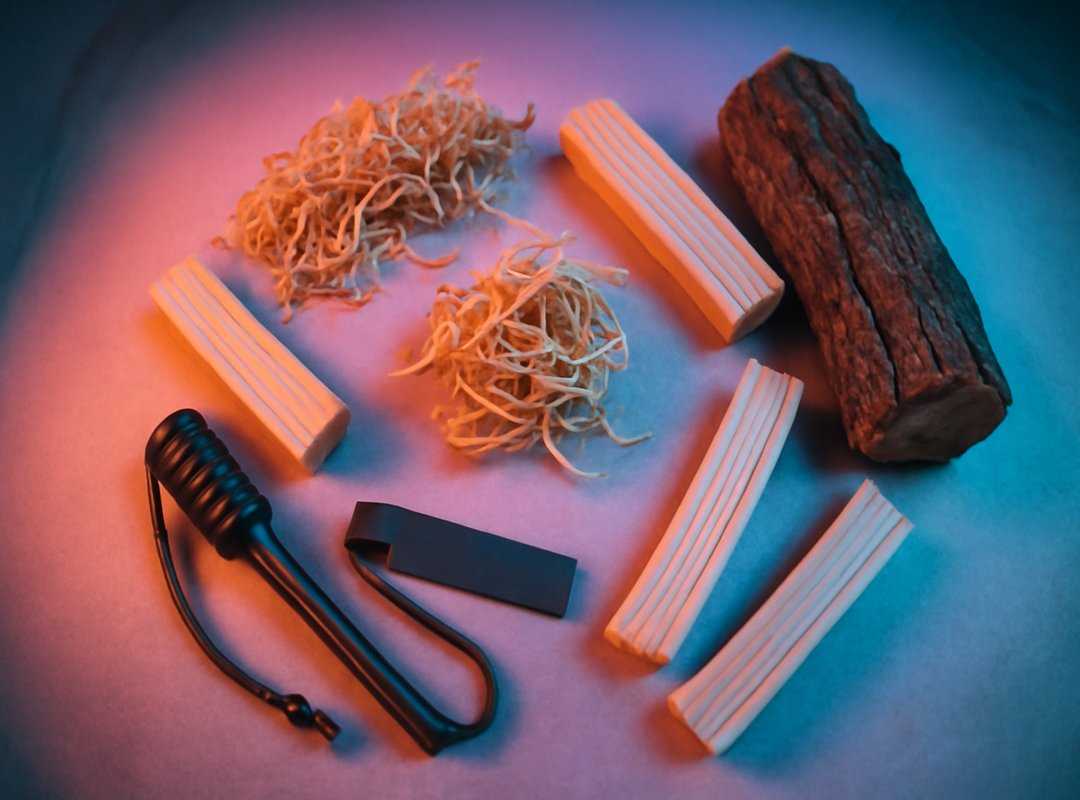
But I’ve been there, and there are ways to make it happen. Let’s talk about finding and creating dry fuel when everything’s soaked.
First off, sourcing natural tinder is key. The best place to look is under dense conifers. You’ll find dry, standing dead twigs.
They hide from the rain pretty well. If you’re lucky, you’ll come across fatwood. This is resinous pine heartwood.
It’s basically nature’s lighter fluid. Also, keep an eye out for the inner bark of cedar or birch. These are surprisingly dry once you peel away the wet outer layers.
You’ll need a sharp knife for this. Take a piece of wood and shave thin curls from it. This increases the surface area and exposes the drier inner wood to a flame.
Now, creating tinder and kindling. Ever heard of feather sticks? They’re a game-changer.
The more curls, the better. It’s almost artistic, really. But be careful.
A slip here could mean a nasty cut.
On to accessing dry fuel wood. It’s all about batoning. Sounds fancy, right?
It’s not. You split larger, damp logs with a knife and a sturdy branch. This reveals the bone-dry heartwood inside.
Important for sustaining a fire in wet conditions. But safety first. Always angle the knife away from your body.
Feeling hungry yet? Once you’ve mastered the fire, you can easily move on to cooking quick and easy campfire meals for beginners. Trust me, there’s nothing like a hot meal after a battle with the elements.
Starting a fire in wet conditions isn’t impossible. It just takes patience and the right techniques. So get out there and give it a try.
You might surprise yourself.
The Ignition Sequence: From Spark to Sustainable Flame
Starting a fire in wet conditions feels like trying to light a candle in a storm. But it’s doable. You just need the right steps.
First, the platform. I always start by building a small base of twigs or bark. Why?
Because it keeps your tinder off that cold, unforgiving ground. Think of it as a stage. Your fire’s debut.
Next, the fire lay. Picture this: a tiny teepee or a lean-to hugging your tinder like a protective coat. It’s all about shielding that delicate flame from wind and rain.
You want it cozy, not smothered. Fine kindling is key here. It feeds your fire without overwhelming it.
Then, the spark. The magic moment. You’ve got your ferro rod ready.
Press it firmly and scrape with purpose. You want a shower of sparks, not a drizzle. It’s like striking a match but with more drama.
Now, nurturing the flame. This is where patience comes in. You gently blow on the ember.
Not too hard, just enough to encourage it. It’s like coaxing a shy performer onto the stage. Slowly add larger kindling as your flame finds its strength.
It’s a dance of balance and timing.
Before you know it, you’ve got a roaring fire even in the worst conditions. Starting a fire in wet conditions isn’t just a skill; it’s an art. And with practice, you’ll be the artist every time.
Ignite the Outdoors Like a Pro
You came here to learn how to start fire wet conditions. Now you can. Wet weather used to steal your heat, turning fire-starting into a battle.
But with the right prep, your flames will thrive. It’s all about having the right kit, finding or making dry fuel, and shielding that precious flame.
Got your kit ready yet? If not, it’s time to assemble your all-weather fire kit. Practice these skills.
Do it somewhere safe. True mastery isn’t just in reading. It’s in doing.
Trust me, you’ll feel the difference when you’re out there, ready for the elements.
Ready to claim your outdoor confidence? Dive in and become unstoppable. Your next adventure awaits, so don’t just read about it.
Live it.
 Wilderness Navigation & Survival Content Strategist
Diane Khanatibo writes the kind of backcountry concepts and gear content that people actually send to each other. Not because it's flashy or controversial, but because it's the sort of thing where you read it and immediately think of three people who need to see it. Diane has a talent for identifying the questions that a lot of people have but haven't quite figured out how to articulate yet — and then answering them properly.
They covers a lot of ground: Backcountry Concepts and Gear, Angle-Ready Wilderness Navigation, and plenty of adjacent territory that doesn't always get treated with the same seriousness. The consistency across all of it is a certain kind of respect for the reader. Diane doesn't assume people are stupid, and they doesn't assume they know everything either. They writes for someone who is genuinely trying to figure something out — because that's usually who's actually reading. That assumption shapes everything from how they structures an explanation to how much background they includes before getting to the point.
Beyond the practical stuff, there's something in Diane's writing that reflects a real investment in the subject — not performed enthusiasm, but the kind of sustained interest that produces insight over time. They has been paying attention to backcountry concepts and gear long enough that they notices things a more casual observer would miss. That depth shows up in the work in ways that are hard to fake.
Wilderness Navigation & Survival Content Strategist
Diane Khanatibo writes the kind of backcountry concepts and gear content that people actually send to each other. Not because it's flashy or controversial, but because it's the sort of thing where you read it and immediately think of three people who need to see it. Diane has a talent for identifying the questions that a lot of people have but haven't quite figured out how to articulate yet — and then answering them properly.
They covers a lot of ground: Backcountry Concepts and Gear, Angle-Ready Wilderness Navigation, and plenty of adjacent territory that doesn't always get treated with the same seriousness. The consistency across all of it is a certain kind of respect for the reader. Diane doesn't assume people are stupid, and they doesn't assume they know everything either. They writes for someone who is genuinely trying to figure something out — because that's usually who's actually reading. That assumption shapes everything from how they structures an explanation to how much background they includes before getting to the point.
Beyond the practical stuff, there's something in Diane's writing that reflects a real investment in the subject — not performed enthusiasm, but the kind of sustained interest that produces insight over time. They has been paying attention to backcountry concepts and gear long enough that they notices things a more casual observer would miss. That depth shows up in the work in ways that are hard to fake.